Soil and compost
Good soil does most of the work
Plants grown in living, crumbly soil need less water, less feeding and less rescuing. Building that soil is slow at first and then looks after itself.
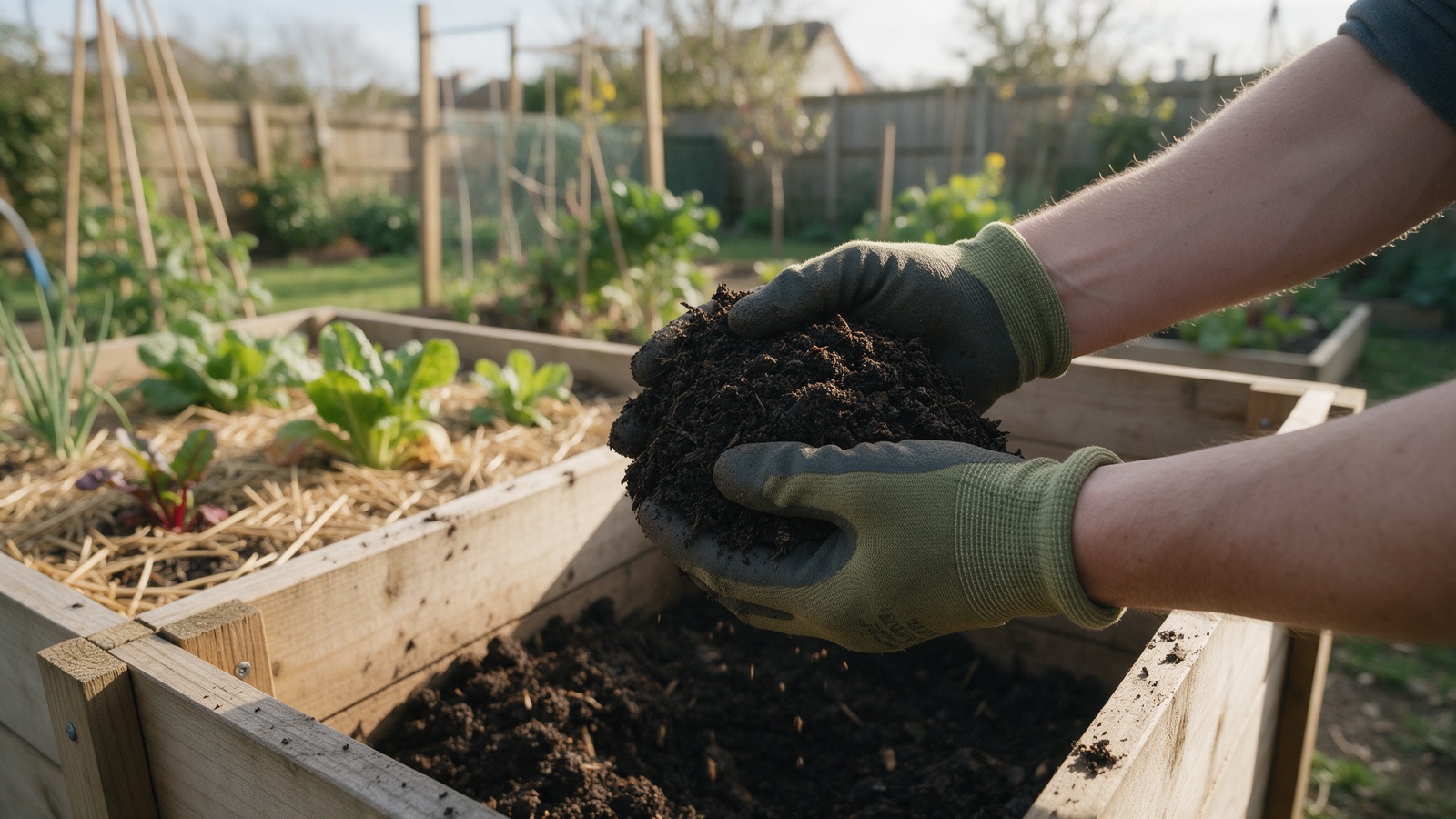
Know what you have
Pick up a handful of damp soil and squeeze it.
- Falls apart and feels gritty: sandy soil. It drains fast and loses nutrients quickly. Add compost every season and mulch thickly.
- Holds a sticky ribbon: clay soil. It holds water and nutrients well but drains slowly and sets hard. Add compost, and never dig it wet. Gypsum helps only if the clay is sodic, meaning a crumb dropped in water turns the water cloudy.
- Holds together, then crumbles when poked: loam. Keep it that way with compost and mulch.
Most vegetables and cut flowers like soil that is slightly acid to neutral, around pH 6 to 7. A cheap test kit from a garden centre tells you where you stand. Lime raises pH; sulphur and compost bring it down slowly.
Compost
Compost is the single best thing you can add to any soil. It feeds the soil life that feeds your plants, opens up clay and helps sand hold water.
A simple heap
- Find a spot on bare soil, part shaded, about a metre square.
- Layer roughly two parts dry brown material (autumn leaves, straw, shredded paper, cardboard) to one part green (vegetable scraps, fresh lawn clippings, spent plants).
- Keep it as damp as a wrung-out sponge.
- Turn it with a fork every week or two to let air in. It will be ready in two to four months in warm weather, longer in cold.
Leave out meat, dairy, oil, pet droppings and diseased plants. If the heap smells, it needs more brown material and air. If nothing is happening, it needs more green material and water.
Short of space
A worm farm takes kitchen scraps on a balcony and gives worm castings and liquid feed. A sealed bokashi bucket ferments scraps, including small amounts of cooked food, which you then bury in the garden.
Mulch
Keep soil covered. A 5 to 7 cm layer of sugar cane, pea straw or lucerne around vegetables and flowers holds moisture, keeps roots cool in summer, smothers weeds and breaks down into the soil. Keep it a hand's width back from stems to avoid rot, and top it up as it thins.
Leave mulch off seed rows until the seedlings are a few centimetres tall.
Feeding
In soil that gets compost each season, many crops need little else. Hungry crops (tomatoes, corn, pumpkins, zucchini, dahlias) benefit from a handful of pelletised chicken manure or a balanced organic fertiliser dug in before planting, and a liquid feed of seaweed or worm tea every two weeks once they start flowering.
Leafy crops like nitrogen. Fruiting crops and flowers like potassium once they flower. Too much nitrogen on tomatoes or flowers gives lush leaves and few fruit or blooms.
Raised beds and pots
Raised beds warm earlier in spring, drain well after heavy rain and save your back. Fill them with a blend sold for vegetable gardens, or a mix of good topsoil and compost, and expect to top them up with compost each year as the level drops.
In pots, always use a quality potting mix rather than garden soil, which packs down and drowns roots. Potting mix runs out of nutrients after a few months, so feed regularly and replace it every year or two.
Rotate your crops
Avoid growing the same family in the same spot two years running. A simple four-step rotation works for most gardens:
- Leafy crops and brassicas, after the bed has had compost.
- Fruiting crops such as tomatoes, capsicum and pumpkins.
- Root crops such as carrots and beetroot, which prefer soil that has not just been enriched.
- Peas and beans, which add nitrogen back for the next round.